

July 2026 water quality update: no rain, low flows and continuing pollution pressure

July’s water-quality testing took place in exceptional dry-weather conditions at the end of July, with the River Mole already under severe low-flow stress. This is a short summary of results.

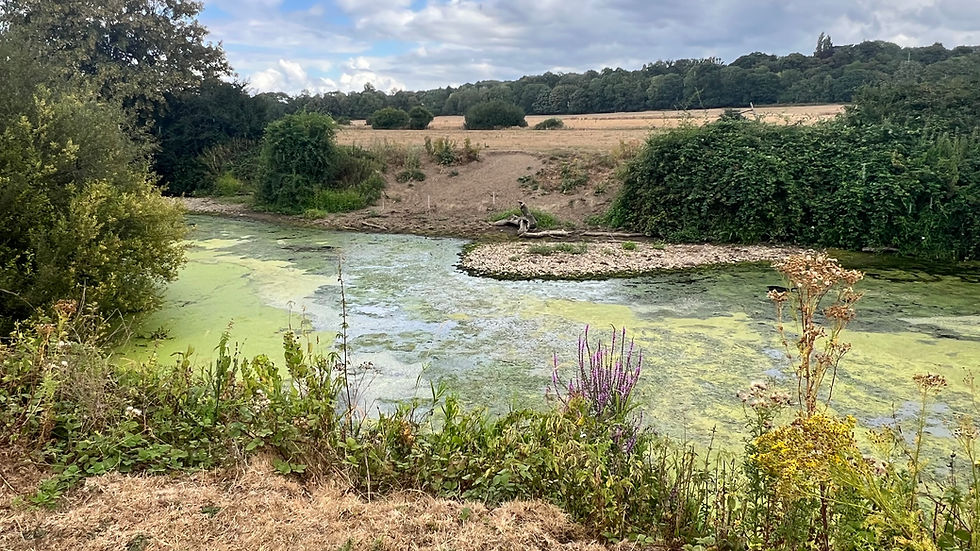
By the July test weekend there had been 0 mm of rainfall for the month to date, no storm overflows had been recorded in the catchment, and River Mole flow at Leatherhead had fallen to just 0.58 m³/s, which is considerably lower than during the 2022 summer drought. The developing vanishing river story through the Mole Gap was becoming the main focus of our summer river watch.

The results continued the pattern seen in June: widespread phosphate pressure, high nitrate along the main River Mole corridor, and localised ammonia spikes — but this time under even drier conditions.

Phosphate remained the clearest catchment-wide concern. The July catchment mean was 1.02 mg/L, and 74% of measured sites were in Poor or Bad status using our localised RMRW/WFD-style thresholds.

Nitrate was higher than in June, with a July catchment mean of 18 mg/L, again concentrated through the main river and sewage-influenced streams.

Ammonia was mostly low, but the exceptions were serious. Hookwood Common Brook again recorded extremely high ammonia at 8.80 mg/L, while Salfords Stream recorded a significant spike at 3.00 mg/L. Both were immediately reported to the EA as they exceed our catchment-specific threshold for reporting which is 2mg/L.
Two streams, Gad Brook and Bookham Brook, were dry again and could not be sampled.
This is a shorter monthly update than our June report. The key message is simple: July did not bring a rain or storm overflow pollution signal. Instead, it showed the continuing extraordinary increase in dry-weather pollution concentration in a catchment under extreme low-flow stress.
We will publish a separate post on the vanishing of the Mole through the Mole Gap, because that unfolding story deserves fuller treatment. This July update focuses on our water-quality results and the wider low-flow context.
Key July findings by pollutant

Phosphate: Phosphate remained the main catchment-wide concern in July. Although the proportion of Poor or Bad sites eased slightly from June, nearly three-quarters of measured sites were still in Poor or Bad status. The highest phosphate pressure continued at sites including Hookwood Common Brook, Leigh Brook, Ember Lower Mole, Man’s Brook, Crawters Brook, Betchworth Brook, Spencers Gill and Sidlow. The Ember site recorded its highest ever phosphate concentration. This shows that phosphate concentration remained widespread even without rainfall or storm overflow activity.

Of developing interest is the closing gap in phosphate concentration noticed since April between streams with STWs and those without. This is certainly one to watch as we progress out of these extraordinary low flow conditions to see if it continues.

Nitrate: Nitrate followed the familiar main-channel pattern. The highest concentrations were again found through the River Mole corridor from Horley downstream, including West Vale Bridge, Gatwick Stream at Horley, Mole Gap at Swanworth Farm, Castle Mill, Stepping Stones, Downside Bridge and the Lower Mole. Several sewage-influenced tributaries, including Burstow Stream at Lake Lane and Leigh Brook, also remained high. This reinforces the pattern that nitrate is carried far downstream through the river system.

Ammonia: Ammonia was mostly low, but a few hotspots dominated the July picture.

Hookwood Common Brook again recorded extreme ammonia concentration at 8.80 mg/L, continuing the serious pattern linked to the known package sewage treatment plant issue. Salfords Stream recorded 3.00 mg/L, a significant spike and by far the highest result this site has returned. Both results were reported to the Environment Agency because they exceeded the 2.00 mg/L reporting threshold recommended by our EA catchment citizen science officer. Other raised readings included Earlswood Brook, Wallace Brook, Bewbush Brook and Fetcham Splash. As in June, ammonia acted less like a catchment-wide signal and more like a warning light for local pollution problems.
Low-flow story and what happens next

July gave us a striking reminder of how much the River Mole can depend on treated effluent during extreme dry weather. At low flows, many river gauges across the catchment show the distinctive daily signature of treated sewage effluent: river levels rise and fall by several centimetres as wastewater flows into sewage works increase and decrease through the day.

These “effluent tides” reflect the daily rhythm of water use across each sewage works’ catchment — washing, cleaning, flushing, showers, kitchens and general household activity — with those peaks later appearing in the river as treated effluent discharge.

On 26 July, SES Water reported supply interruptions after problems linked to a power outage at its Bough Beech Water Treatment Works. The disruption affected Gatwick Airport and parts of the surrounding supply area, with some customers experiencing low pressure or temporary loss of supply.

For most people this was a water-supply story. For the River Mole, it also revealed something important. With less water being used across parts of the Crawley and Horley area, less wastewater reached sewage treatment works, especially Crawley and Horley STWs. That meant less treated effluent was returned to the river system. Downstream river levels then showed a clear step down, especially below Horley.
Of course, this does not mean treated effluent is “good” for the river. It shows how little natural flow remains in prolonged dry weather, and how vulnerable the Mole becomes when low flows, high temperatures and pollution pressure combine.
That vulnerability is now visible even more through the developing vanishing river story in the Mole Gap. As the river loses water through the chalk reach, remaining flows become even more important for wildlife, water quality and the resilience of isolated pools but that's a story for next time!
August monitoring will be especially important. If dry and hot conditions continue, we may see further stress on the river, stronger concentration of pollution, and more pressure on fish, invertebrates and other wildlife. Please keep watching your local streams and report anything that looks or smells wrong with any water course to River Mole River Watch, the Environment Agency on 0800 807060 and Thames Water https://www.thameswater.co.uk/help/report-a-problem#/view-and-report-problems


Comments